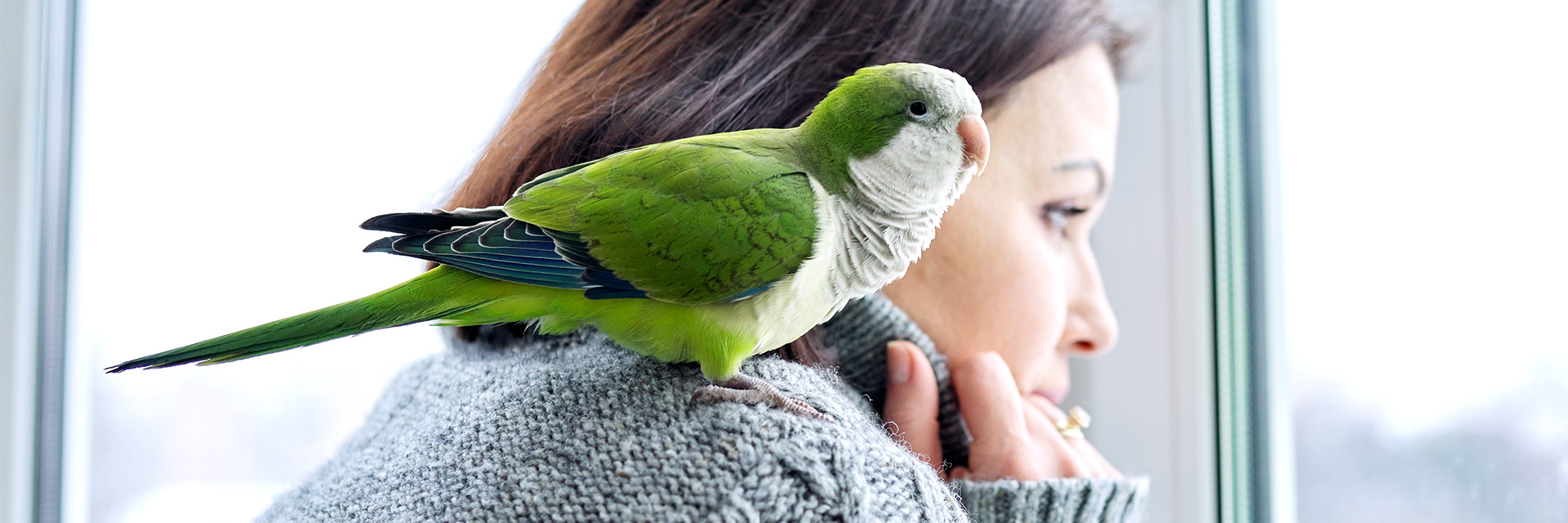
It’s bird week at Big Al’s, so if it's not too much of a bird-en, we’d like to tell you about some of our feathered friends! But, before we do that, we'd love to tell you why a plumed pal could be the perfect addition to your family. Owning a bird, or a pair of birds has many benefits!
You've Got a Friend In Me
Birds provide a kind companionship you might not expect and form strong emotional bonds with their humans. Research has shown that the company of pet birds can improve the well-being of their owners and the companionship from a feathered friend can mimic some aspects of human relationships that can improve health as well. Though their lifespans have a broad range, birds typically have a longer lifespan than other types of pets. This means you will have a companion for years and years to come.
Social Synergy
Many birds are social, intelligent, love interaction and some can even learn human language. This social interaction between you and your beloved pet encourages interaction with other bird owners and is mutually beneficial. Though they do require a lot of attention and time outside of their enclosures, they do not require a daily walk or frequent baths, as they are self-sufficient and independent a lot of the time. Birds are relatively low-maintenance pets, comparatively to other types of pets, but provide significant social interaction with their owners.
Blessed, Not Stressed
Bird songs have the ability to relax a human physically and reduce stress and anxiety. Studies also show there are healing aspects of bringing the natural environment into your home. Birds have been known to reduce heart rate, blood pressure, and stress levels in their owners as well.
Bird Brain
Not only are bird sounds able to relax you, but they are known to be stimulating to the cognitive brain as well. The cognitive function is the brains capability to remember, to think and to learn. Teaching your bird tricks will keep both of your brains sharp and provides much needed enrichment for your pet. Putting your brain to work in this way nurtures healthy brain function, and can increase concentration, short term memory, and productivity. When you get a bird, you are bringing a fun, smart, loyal family member home!
English Budgie
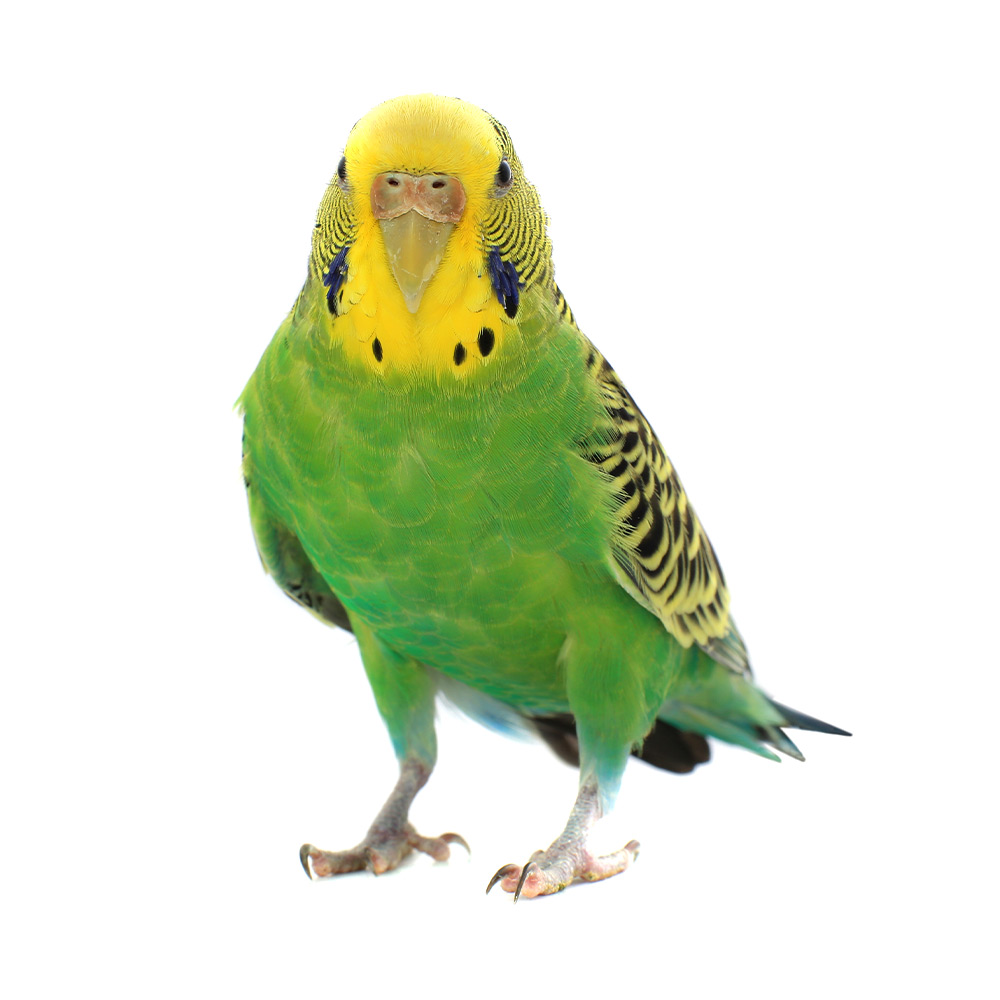
The English budgie, first discovered in the 1840's, is characterized by a large forehead, a fluffy head, and large cheek and throat spots. English Budgies are also known as the Exhibition Budgie as they make a great show breed. They have bright color variations, clean pattern appearance and great personalities which makes them a favorite with exhibitioners. These qualities, in addition to the fact that they are generally quiet, curious, social, easy to train and affectionate makes them excellent family pets as well. English budgies are two times the size of a common budgie and are typically around 10 inches from top of the head to tip of the tail. Beaded toys are a favourite, as well as perches for swinging. English budgies require a large cage, and room for horizonal flying. An English budgie needs a lot of attention, stimulation and they love to chew or shred to keep their beaks trim. Because of their large body size, they prefer to swing or walk on the ground. Budgies are a type of parrot, and though not all parrots talk, English budgies are able to speak.
Did you know?
Puck, the budgie held the world record in 1995 with “the bird with the largest vocabulary in the world”. He was recorded as knowing 1728 words. Puck could mimic, or create his own sentences with the words he knew.
Peach-Faced Lovebird
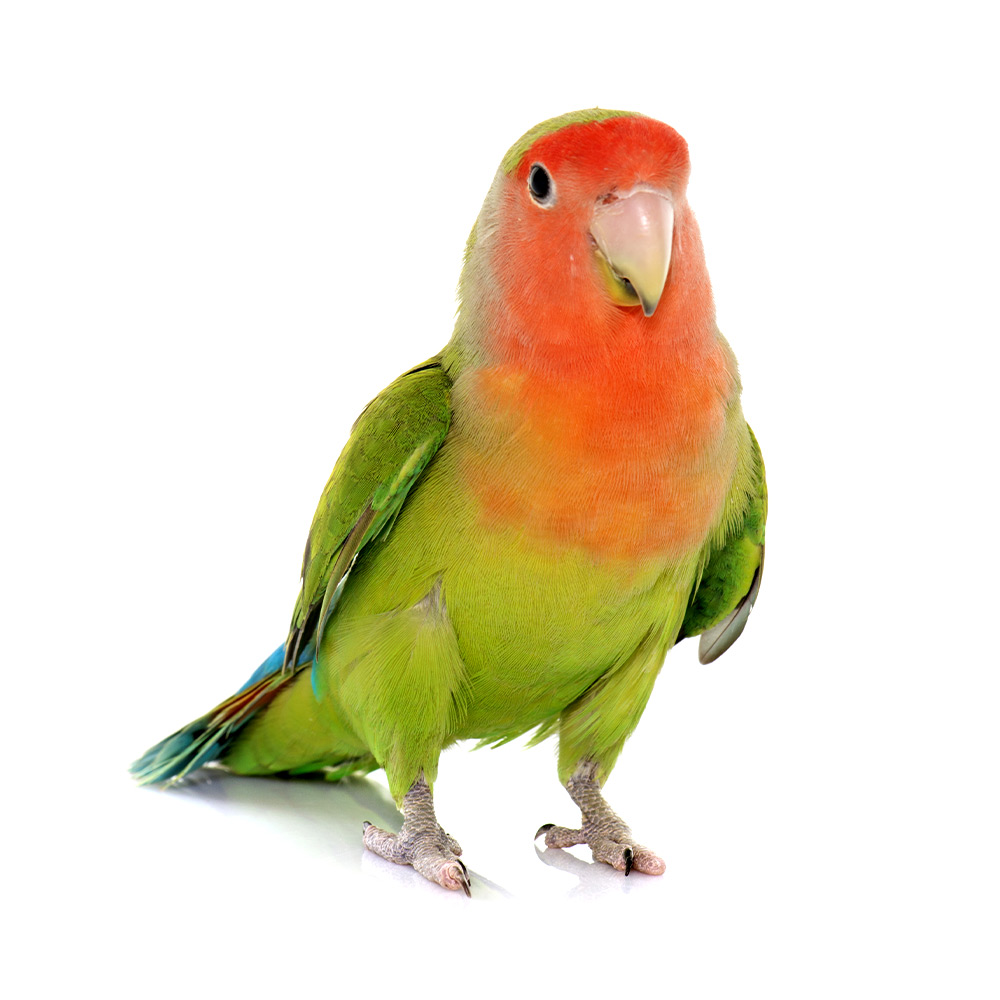
The Peach-Faced Lovebird, another species of parrot, first discovered in the 1820s, in Southwestern Africa also has populations in Arizona and Hawaii. Although they are typically characterized by a bright green color, with peach-colored feathers on their forehead, chin, throat, cheeks, and upper chest, with blue tailfeathers, other color combinations are common as well. These peach-colored markings give the bird it’s alias, the Rosy-Faced Lovebird. These love birds are approximately 6 inches in length, the largest of the lovebirds, they are active, friendly and form strong bonds with their mates and owners. Peach-Faced lovebirds enjoy having lots of room to fly, shredding, foraging, and balancing toys. Though they are not mimics, they can learn a few words and enjoy loudly chattering with their high-pitched call sounds. Males quite often have more vibrant colors than their female counterparts, but it can be difficult to determine the gender.
Did you know?
The Peach-faced Lovebird can fly at speeds of 58 km/h
Cockatiel
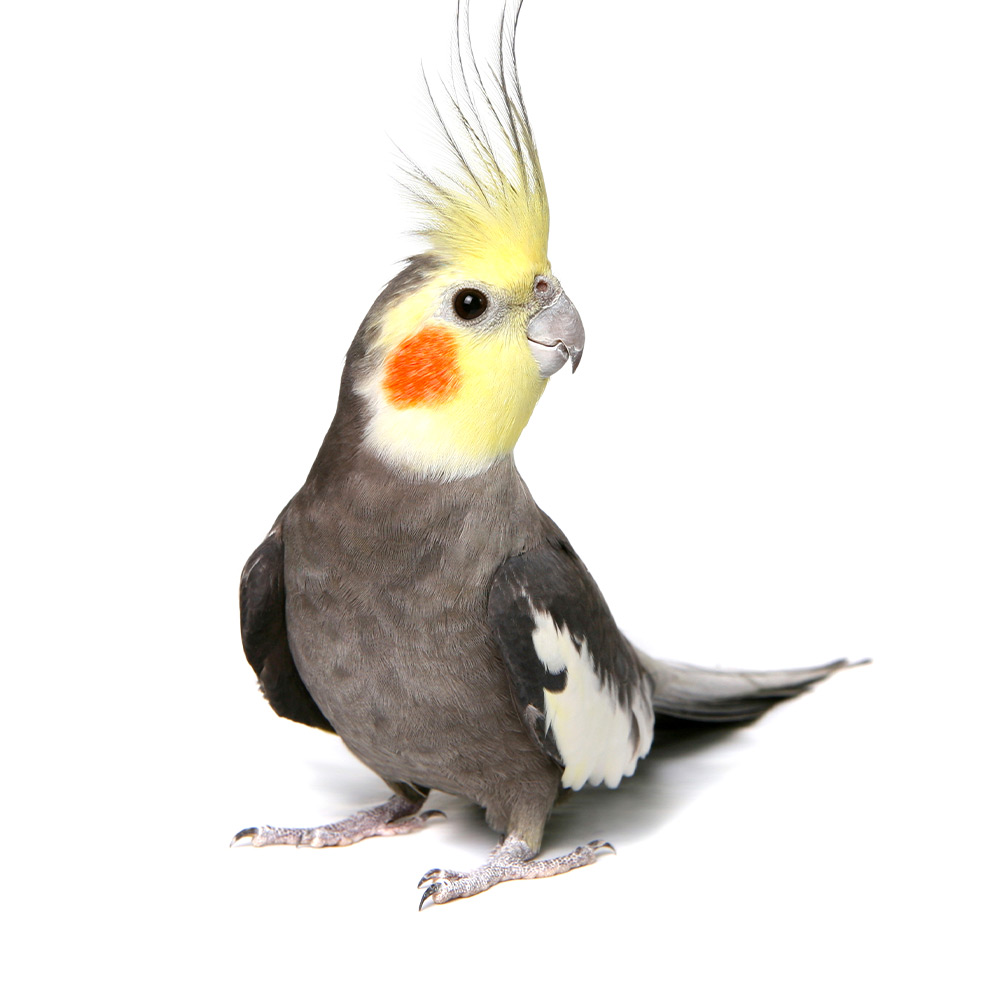
Discovered in Australia in 1770s, the smallest member of cockatoo family, at 12-13 inches in length, is the Cockatiel. Another parrot type, with a distinct head crest, grey body, yellow face, with orange cheek patches. Cockatiels are affectionate, friendly, and aim to please. These positive traits make them the # 1 post popular pet bird in North America, and great for families. The cockatiel is a great mimic and can be taught to sing and speak. They are very outgoing, love to forage, shred, perch and look at themselves in the mirror. As a foraging activity, line cage with newspaper and sprinkle treats for millet seed for them for forage for.
Did you know?
The head crest of a Cockatiel indicates mood. If the crest is flattened close to the bird’s head, this indicates the bird is defensive, angry or stressed, while straight-up crest feathers indicate curiosity. A relaxed looking crest about halfway up typically indicates a tired bird.
Crimson-Bellied Conure
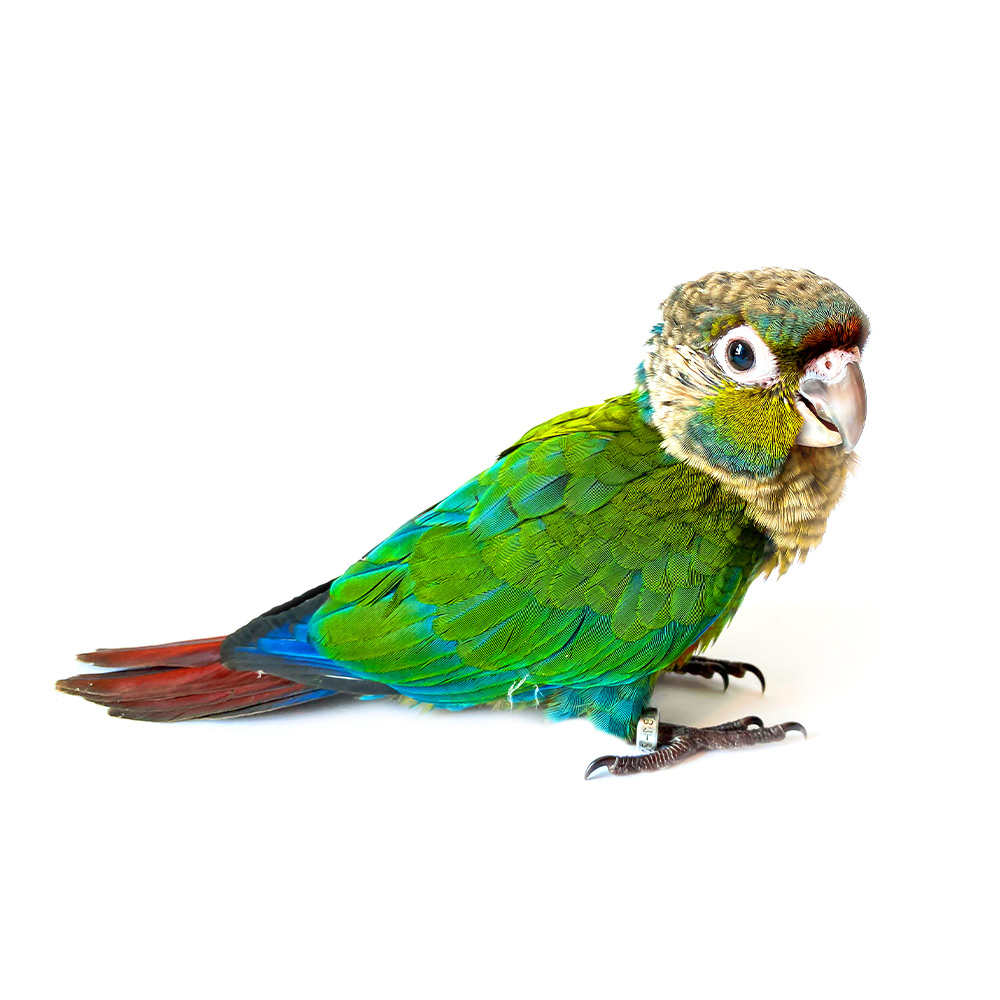
Hailing from rainforests in Brazil, and documented in the 1820s, the Crimson-Bellied Conure is quiet than other parrot varies, grow to ~ 9” tall, have a gentle disposition, and have a soft call. They are characterized by their red bellies, green wings, backs, and thighs with turquoise and blue on the bottom half of the body. Grey and white patterned feathers appear on the head and neck with variations of green and blue patches on the cheeks and forehead. These Conures can do tricks, can learn a few words, need a lot of attention, are social birds, are cuddly, affectionate, big personality, and forms strong bonds with their owners. Conures are best in pairs, and chew toys, wooden blocks, vine balls, and bells.
Did you know?
Crimson-bellied parakeets enjoy baths! Provide daily baths if possible to keep your feathered friend happy.
White Bellied Caique
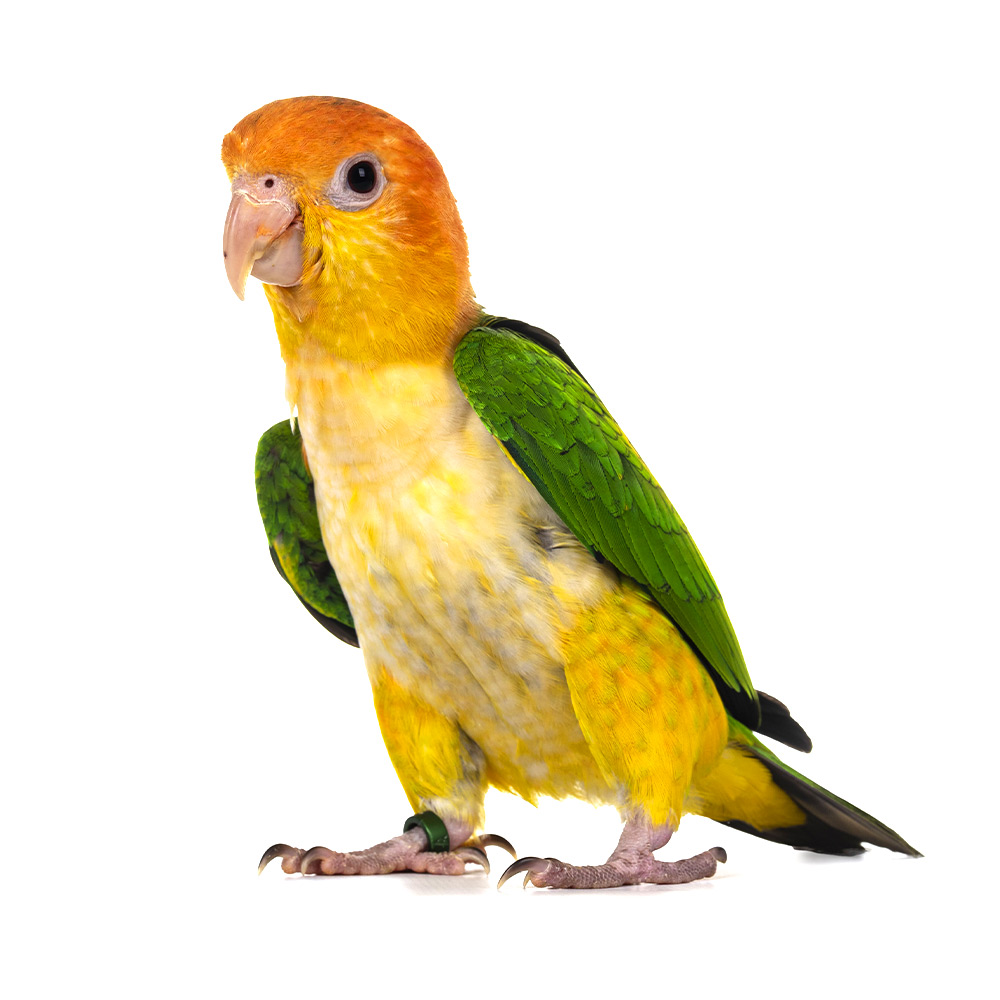
The White-Bellied Caique, discovered in the 1890s, from South America, has a white belly, green wings, yellow thighs, and a brightly coloured yellow and orange head. These Caiques have high energy, goofy personalities, are stubborn, and strong willed. While they are fiercely independent, they are social and require lots of attention for their owners. They can live until 20s or 30s, grow to be 9 inches, have a short tail, a stout body, and ruffled chest feathers. They make for entertaining pets, as they are one of the most energetic parrots, and they form strong bonds to their owners. Caiques prefer to hop instead of fly or walk, they like to swing, play with vine balls, chew toys, bead toys, and claw toys.
Did you know?
White-Bellied Caiques are known as the “dancing parrot” because of their affinity for hopping on their feet, and can be taught to perform their “dance” on cue.
Zebra Finch
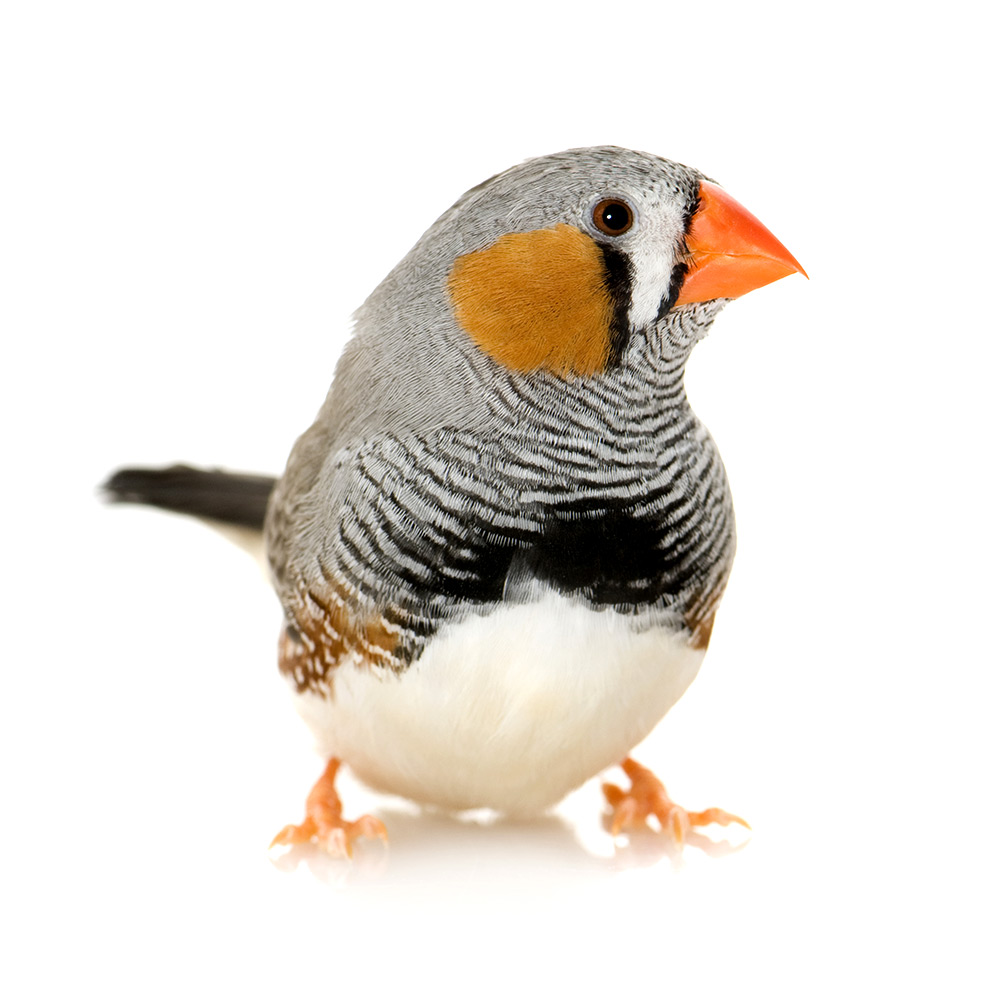
Discovered in 1801, the Zebra Finch was first captured in Australia. It has a white body, grey head and wings with dark-colored chests, and brightly colored beaks and is specifically characterized by distinctive white and black stripes on the tailfeathers. Male and female Zebra finches are easy to tell apart, as they have different physical characteristics, this is called “dimorphic” or “existing in two different forms”. Male Zebra Finches have colored patches on their cheeks, and down their body, and have black and white striped patterns on their neck/throat. This type of finch isn’t the smallest, but it only grows to about 4 inches as an adult and can live up to 7 years. Zebra finches thrive best in pairs or groups of more than one due to their desire to be social. Their social traits, in addition to their active personalities and their hearty nature, make them an ideal beginner bird species. Finches require lots of horizontal room for flying and enjoy perching, foraging and playing with ropes and natural wood toys.
Did you know?
Male Zebra Finches are more likely to sing than their female counterparts, and often teach their young to sing as well.
Green Cheek Conure
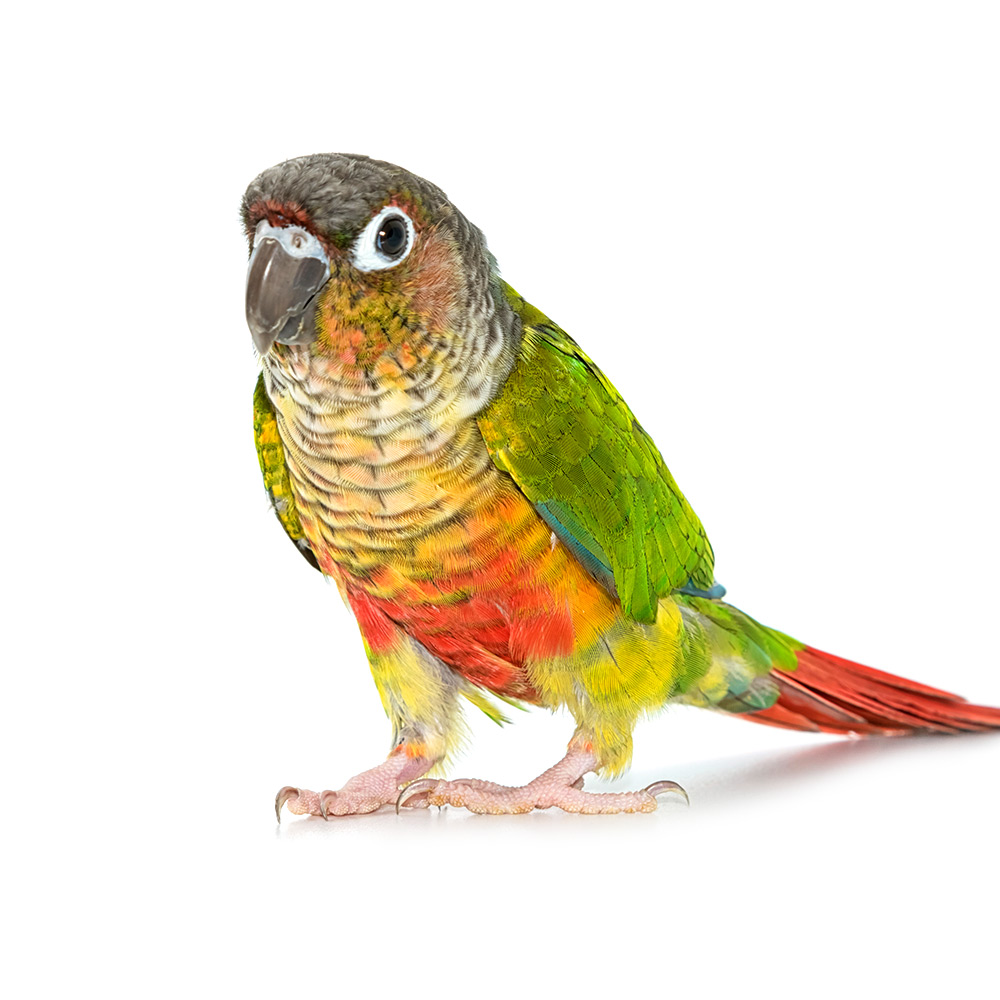
First discovered in South America in 1854, the Green Cheek Conure is one of the smaller, and more shy conures. They measure 10 inches in length, and are mostly green, with gray patterned feathers on the neck and head, red colored bellies, and red tail feathers. Green Cheek Conures have comical and outgoing personalities, love to socialize with their owners, and they are quieter than other conures, but have been known to conjure up some noise of their own. They learn quickly and can learn tricks including a few words, but they do not typically talk. Green Cheek Conures thrive in pairs, as in their natural environment they live in flocks, and will require lots of time outside their enclosures and attention from their owners. To stay stimulated, these birds love to forage and play with chew toys and require space to move around freely.
Did you know?
The Green Cheek Conure has a “class clown” type personality, and they are known for hanging upside down and other goofy antics.